
Celebration Of Lights Is On 12/2/26. Click To Purchase Tickets

Grief Support in Bronxville: Getting Through the Holidays After a Loss

Grief Support in Bronxville: Getting Through the Holidays After a Loss

If the holidays feel heavier this year because someone you love has died, you’re not alone, and nothing is wrong with you. Grief support in Bronxville can help you get through the season, whether that’s a remembrance event, a support group, or one-on-one grief counseling.

Thanksgiving, Hanukkah, Christmas, and New Year’s are built around family, tradition, and an empty chair is hard to ignore. The first holiday season after a loss is often the hardest, but the second or tenth can catch people off guard too.

This guide covers why grief can feel stronger in the holidays, practical ways to plan, ideas for honoring the person you miss, how to help grieving children, and when grief counseling may help. It also shares details on Jansen’s Celebration of Lights, a remembrance gathering in Bronxville on December 2.

Do I Need Grief Support in Bronxville During the Holidays?

The holidays tend to stir up grief because they’re full of reminders: a favorite dish, a seat at the table, family traditions. At the same time, there’s pressure to feel cheerful and keep up with plans.

Yale Medicine’s palliative care program describes the season as a time of mixed emotions for people who are grieving, with less energy to meet the usual demands and painful reminders that a loved one isn’t there to celebrate. Feeling sad, tired, irritable, or numb in December doesn’t mean you’re going backward.

Is My Grief Normal?

Almost certainly. Grief can bring sadness, numbness, guilt, anger, and even relief, and there’s no right or wrong way to mourn. For most people, the most intense pain eases with time, even though the missing never fully goes away.

The National Institute on Aging notes that grieving people often cry easily and may have trouble sleeping, little interest in food, problems concentrating, and a hard time making decisions. It also says many people feel guilty or surprised the first time they laugh or enjoy themselves after a loss. Those moments are normal too.

How Can You Plan for Bronxville Grief Support During the Holidays ?

Decide ahead of time what you want the holidays to look like, and keep the plan flexible. A little planning takes some of the dread out of the days themselves.

These ideas draw on guidance from Yale Medicine:

  • Talk it through as a family: decide together which traditions to keep, which to pause, and whether to start something new.
  • Set limits: let go of what you “should” do. Fewer gatherings, a shorter visit, or a quiet day at home are all reasonable choices.
  • Accept help: when people offer, tell them what would help, whether that’s cooking, shopping, or simply keeping you company.
  • Take care of your body: rest, eat regular meals, get some movement, and go easy on alcohol, caffeine, and sweets.
  • Have an exit plan: it’s fine to leave a party early or step outside for a few minutes when a wave of grief hits.

What If This Is Your First Holiday Without Them?

Go gently. The first season after a death is often the hardest, because every tradition is happening for the first time without that person. There’s no need to make it a “normal” holiday.

Some people keep every tradition exactly the same because it feels comforting. Others change almost everything, like hosting at a different house, eating out, or traveling, because the old way hurts too much right now. Both are fine, and you can decide differently next year. If you’re grieving alongside others, check in with each other. A spouse, adult children, and grandchildren may each want something different, and saying so out loud helps everyone feel heard.

Expect the lead-up to be harder than the day itself. Many people find that the anticipation, the decorations going up, and the invitations arriving stir up more grief than the holiday does.

Ways to Honor a Loved One During the Holidays

Small rituals can give grief a place to go. Many families find comfort in including the person who died rather than working around their absence.

  • Light a candle at dinner or share a moment of silence before the meal.
  • Cook their signature recipe or play the music they loved.
  • Go around the table and share a favorite memory.
  • Make a donation in their name with the money you might have spent on their gift.
  • Visit a place that meant something to them.

Jansen’s Celebration of Lights in Bronxville

Jansen’s Celebration of Lights is a remembrance gathering where the names of loved ones are read aloud during a lighting ceremony. This year it takes place on Wednesday, December 2, 2026, at 6:30 p.m. in the Edwards Room of the Reformed Church of Bronxville, 180 Pondfield Road.

You can RSVP and submit up to three names to be read by November 30. Donations are welcome but not required; there’s an option to submit names only. For many families, hearing a loved one’s name spoken in a room full of people who understand is a meaningful way to begin the season.

What Bereavement Services in Bronxville Does Jansen Offer?

For families looking for bereavement services in Bronxville, Jansen offers support for up to 13 months after the death of a loved one. That includes individual counseling, support groups, phone calls, and mailings timed to the months when grief often resurfaces.

Here’s what bereavement services through Jansen include:

  • Individual counseling sessions with clinical social workers and trained counselors
  • Bereavement support groups, which are free of charge
  • Check-in phone calls
  • Condolence cards and an anniversary card
  • Mailings after the first, third, sixth, ninth, and twelfth months
  • A closing letter after the twelfth month

Group schedules change through the year, so check the bereavement services page for what’s coming up. Our post on how structured bereavement support works explains the 13-month program in more detail.

When Is Grief Counseling a Good Idea?

Grief counseling can help at any point, and you don’t need to be in crisis to ask for it. It’s especially worth considering if sadness is making it hard to get through daily life, or if the pain isn’t easing over time.

The National Institute on Aging describes complicated grief as mourning that becomes so long or distressing that it keeps a person from accepting the loss or moving forward with their own life. In 2022, the American Psychiatric Association added prolonged grief disorder to its diagnostic manual. For adults, it applies only when a loss happened at least a year ago and intense grief symptoms have been present nearly every day for at least the past month.

Signs it may be time to talk with someone:

  • You can’t stop thinking about the person or how they died, and it crowds out everything else.
  • Daily tasks like eating, working, or getting out of bed feel impossible for weeks at a time.
  • You feel life has lost its meaning, or you’ve pulled away from everyone.
  • Months have passed and the pain isn’t easing at all.

If you ever have thoughts of harming yourself, call or text the 988 Suicide and Crisis Lifeline at 988, any time, day or night.

How Can You Support a Grieving Friend or Neighbor?

Show up, say the person’s name, and offer specific help. Many grieving people want to talk about the person who died, but others hesitate to bring it up for fear of causing pain.

  • Be specific: “Can I drop off dinner Thursday?” is easier to accept than “Let me know if you need anything.”
  • Invite without pressure: include them in plans and make it easy to say no.
  • Remember the dates: a note on a birthday or anniversary means a lot.
  • Listen more than you advise: you don’t need the perfect words.

Grief Support in Bronxville From Jansen This Holiday Season

Jansen Hospice and Palliative Care is a not-for-profit hospice that has supported families in Bronxville and nearby communities for more than forty years. Our bereavement counselors understand how hard this season can be, and you’re welcome to reach out with questions about support groups, counseling, or the Celebration of Lights.

Learn more about our bereavement services in Bronxville, or contact us to talk with our team.

Frequently Asked Questions

Is it normal to feel worse during the holidays after a loss?

Yes. Holidays are packed with traditions, gatherings, and memories, so they tend to bring grief closer to the surface. Many people find the days leading up to a holiday harder than the day itself, because the anticipation builds. You might also feel guilty when you do enjoy a moment, or frustrated that others seem to have moved on. All of that is common. Grief doesn’t follow a schedule, and a hard December doesn’t mean you’re grieving the wrong way or losing ground. If the heaviness lasts well beyond the season, or makes it hard to function day to day, that’s a good reason to talk with a grief counselor, a support group, or your doctor. You don’t have to wait until things feel unmanageable to ask for help.

What is the difference between grief counseling and a support group?

Grief counseling is one-on-one time with a trained counselor or clinical social worker. It gives you space to talk privately about your loss, work through specific struggles, and build coping strategies that fit your situation. A support group brings together people who have experienced a similar loss, such as the death of a spouse, and lets them share experiences and encouragement. Some people prefer the privacy of counseling, while others find comfort in knowing they’re not the only one feeling this way. Many people use both at different times. Jansen offers individual counseling and free bereavement support groups to families for up to 13 months after a loved one’s death, so you can try what feels right and change course if you need to.

Who can attend the Celebration of Lights?

The Celebration of Lights is a remembrance gathering hosted by Jansen Hospice and Palliative Care, and it’s open to families and community members who want to honor someone they’ve lost. The 2026 event is on Wednesday, December 2, at 6:30 p.m. in the Edwards Room of the Reformed Church of Bronxville, 180 Pondfield Road. During the lighting ceremony, the names submitted in advance are read aloud. You can RSVP and submit up to three names through the event page by November 30. A donation is optional, and you can choose to submit names only. Parking is available on Pondfield Road, Kraft Avenue, and Meadow Avenue, and an elevator is available from the back of the staff parking lot on Midland Avenue.

How long does grief last?

There’s no set timeline. For most people, the sharpest pain eases over months, and good days slowly start to outnumber hard ones, though anniversaries and holidays can bring it back for years. That’s part of normal grief, not a setback. A smaller group of people experience grief that stays intense and keeps getting in the way of daily life. The American Psychiatric Association recognizes this as prolonged grief disorder, which for adults can only be diagnosed when the loss happened at least a year earlier and the symptoms are present nearly every day. If you’re worried about how you or someone close to you is coping, a grief counselor or doctor can help you sort out what’s typical and what may need more support.

Can I get bereavement support if my loved one wasn’t in hospice?

Often, yes. The National Institute on Aging notes that people can ask hospice workers about bereavement support even if hospice wasn’t used before the death. Programs and eligibility vary from one organization to another, so the simplest step is to call and ask. Community options can also help, including support groups run by local hospitals, senior centers, religious congregations, and funeral homes. For families with children who have lost a parent or sibling, the BCW Tree House offers free peer support groups for kids and a separate group for parents. If cost is a concern, your doctor or a local social worker may know of free or low-cost counseling. The most important thing is not to grieve completely alone.
From the First Month to the Last Letter: How Structured Bereavement Support Guides You Through Grief

When a loved one passes, grief does not follow a schedule and neither does our support. At Jansen Hospice, we walk alongside families for 13 months after loss through individual counseling, grief support groups, personal phone calls, condolence cards, monthly mailings, and anniversary remembrances. Whether your family received long term hospice care at home or in an inpatient setting, our structured bereavement program is here for you every step of the way. You are not alone, and you do not have to navigate this journey without support.

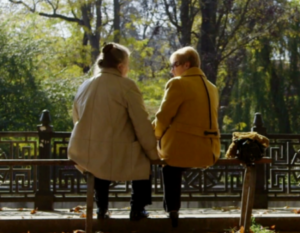
Two women hanging out outside at residential hospice westchester ny

Grief Does Not End When Hospice Care Does

One of the most common misconceptions families carry after a loss is that bereavement support ends when hospice care ends. It does not. At Jansen Hospice, our commitment to your family extends well beyond the final days of your loved one’s life. We believe that caring for a family means staying present through the hard months that follow, not just the ones leading up to a death.

What Is Long Term Hospice Care, and What Comes After?

Long term hospice care refers to the comprehensive medical, emotional, and spiritual support provided to patients with a serious illness and their families, with a focus on comfort and quality of life rather than curative treatment. Whether care is delivered at home or in an inpatient setting, the mission is the same: dignity, comfort, and family-centered care.

What many families do not realize is that this support is designed to continue after death. As a private hospice serving Westchester and the surrounding communities, Jansen Hospice has built a bereavement program that honors the full arc of grief, not just its earliest moments. Research published by the U.S. Department of Health and Human Services confirms that hospice programs play a critical role in supporting community bereavement and that structured grief services lead to meaningfully better outcomes for families.

How Jansen’s 13-Month Bereavement Program Works

Grief does not resolve in weeks. It moves in waves, sometimes quieting and then returning with full force around a birthday, a holiday, or an ordinary afternoon. Our bereavement program is built around this reality, offering layered support across a full 13 months after your loved one’s passing.

Here is what that support looks like:

  • Individual counseling sessions with clinical social workers and specially trained counselors
  • Grief support groups including spousal and partner loss groups in White Plains and Cortlandt Manor
  • Personal phone calls to check in and offer a compassionate, listening ear
  • Condolence cards in the days following your loss
  • Monthly mailings at the first, third, sixth, ninth, and twelfth month after the death
  • A closing letter at the end of the twelfth month
  • Anniversary cards to acknowledge the milestones that matter most

Each of these touchpoints is intentional. Together, they form a structure that holds grieving families steady as the months unfold.

Home Hospice Southern WestchesterWhy Structure Matters in Grief

It might seem surprising that something as personal as grief would benefit from structure. But a systematic review published in PMC-NCBI on the effectiveness of support for people bereaved through advanced illness found that continuity between pre- and post-bereavement support is widely acknowledged as leading to better bereavement care. The trust and rapport built during hospice care, carried forward into bereavement support, makes a meaningful difference in how families heal.

Structure also provides something grief often takes away: a sense of rhythm. Knowing that a call is coming, that a card will arrive, that a counselor is available, gives families a thread to hold onto when everything else feels uncertain.

Inpatient Hospice vs. Home Hospice: Does It Affect Bereavement Support?

Families sometimes wonder whether the setting of hospice care affects what bereavement support is available to them afterward. The short answer is: it does not. Whether your loved one received care at home or in an inpatient facility, Jansen Hospice’s bereavement program is available to your family all the same.

The distinction between inpatient hospice vs. home hospice is an important one when it comes to the level of medical care and around-the-clock support a patient needs. But when it comes to the grief journey your family walks after a loss, our commitment to you remains exactly the same regardless of where that care took place.

Understanding the Difference Between Grief and Complicated Grief

Most people move through grief gradually, finding moments of peace alongside moments of pain. This is what the HHS bereavement services report describes as the typical grieving process. For some, however, grief persists in ways that significantly interfere with daily life. This is known as prolonged grief disorder or complicated grief, and it is distinct from the normal grieving process.

If you find that your grief is not easing over time, that you are struggling to function, or that feelings of hopelessness are intensifying rather than softening, it may be time to speak with a grief counselor. Jansen’s individual counseling services are here for exactly this reason. Reaching out for more support is not a sign of weakness. It is one of the most courageous things a grieving person can do.

Key Takeaways

  • Bereavement support does not end when hospice care ends. Jansen Hospice walks with families for 13 months after loss.
  • Structured bereavement care, including counseling, support groups, and regular check-ins, leads to better outcomes for grieving families.
  • Our bereavement program is available to all families we serve, regardless of whether care was provided at home or in an inpatient setting.
  • Grief support groups offer community, connection, and a space where you do not have to grieve alone.

Frequently Asked Questions

How long does Jansen Hospice’s bereavement support last?

Jansen Hospice provides bereavement support for up to 13 months following the death of your loved one. This includes individual counseling, support groups, personal phone calls, condolence cards, monthly mailings, and anniversary remembrances. According to the NCBI Bookshelf’s overview of bereavement intervention programs, approximately 70 percent of hospices offer bereavement services for about a year following a loss, with the most effective programs offering a layered combination of contacts over time rather than a single point of outreach.

What is the difference between grief counseling and a grief support group?

Individual grief counseling involves one-on-one sessions with a trained clinical professional, while a grief support group brings together people who have experienced similar losses in a shared, facilitated setting. Both are valuable and serve different needs. The HHS report on bereavement and grief services highlights that a variety of support types are needed because every person grieves differently, and a combination of individual and group support often produces the best outcomes.

You Do Not Have to Walk This Road Alone

At Jansen Hospice, we believe no family should have to navigate grief without a caring, knowledgeable team by their side. Whether you are newly bereaved or approaching a difficult anniversary, our bereavement program is here to meet you exactly where you are.

If you would like to learn more, we invite you to explore our bereavement services or contact our team to speak with someone who understands. There is no wrong time to reach out.

Sources

  1. U.S. Department of Health and Human Services (ASPE) – An Overview of Bereavement and Grief Services in the United States (2023)
  2. PMC-NCBI – The Impacts and Effectiveness of Support for People Bereaved Through Advanced Illness: A Systematic Review (2020)
  3. NCBI Bookshelf – Bereavement Intervention Programs

Bereavement Services In Bronxville

Grief can affect everyone in different ways. When losing a family member or a loved one, our mental health can deteriorate. The overwhelming feelings can be endless during the grieving process.

Jansen Hospice and Palliative Care is here to help you while you navigate this isolating time.

How Bereavement Service Can Help After Losing a Loved One, Man sitting on park bench in front of gloomy waterside view,

What Can Bereavement Services in Bronxville Offer?

Jansen Hospice and Palliative Care offer our families a variety of bereavement services for up to a period of 13 months following the death of their loved ones.

We understand the grieving period can be long-lasting and a difficult process to go through.

Bereavement services may vary from person to person, that’s why Jansen Hospice and Palliative Care offers a wide range of options to help guide you through this hard time.

You don’t have to grieve on your own, we’re here to help. Our highly trained staff are ready to help you find a healing process that works for you and ensure you feel supported during this difficult time.

Our hospice, palliative care, and bereavement services are made to fit each individual’s needs.

Jansen has provided compassionate care and unparalleled services to patients who wish to live in the comfortable surroundings of their own home, among family and friends, with peace and dignity for over 30 years. If you or someone you know could benefit from our services give us a call today.

What Types of Bereavement Services in Bronxville Are There?

Jansen Hospice and Palliative Care is here to help you and your loved ones.

We have clinical social workers, specially trained counselors, and volunteers who have experience dealing with all areas of bereavement.

We have services that are accessible to the Bronxville area such as:

  • Individual counseling sessions
  • Support groups
  • Phone calls
  • Condolence cards
  • Mailings after the first, third, sixth, ninth, and twelfth month
  • Closing letter after the twelfth month
  • Anniversary cards

Trustworthy Bereavement Services in Bronxville

Jansen’s personalized approach to hospice care imparts peace of mind during a very difficult and vulnerable time. Helping family members is an essential part of our mission, and our exceptional staff and professionally trained volunteers are available when needed most.

Jansen Memorial Hospice opened its doors on January 3, 1984, bringing the gift of dignity and hope to families in Westchester and Bronx counties. For over 35 years, the care provided by our nurses, social workers, doctors, aides, therapists, and volunteers has truly been immeasurable.

Who Is Eligible For Bereavement Services In Bronxville

Jansen serves people living in Westchester County or The Bronx who are faced with an advanced illness with a limited prognosis such as cancer, AIDS, neurological diseases, cardiac diseases, and pulmonary diseases.

If you are not sure if you or your loved one is eligible, please call us – we can help you.

Finding The Right Bereavement Services in Bronxville

Contact Jansen Hospice and Palliative Care today to receive information about Hospice Care, Palliative Care, and Bereavement services in Bronxville at (914) 787-6158

Learn more about bereavement services >

Bereavement Services in Scarsdale

When you lose a loved one, the grieving process can be overwhelming. Grief is a natural process following the loss of a loved one, but every individual is different and may need different types of support through their bereavement. Jansen has been helping friends and family members of those in hospice and palliative care find peace after a loss for decades.

Our Bereavement Services in Scarsdale

  • Counseling sessions– Some individuals benefit from individual counseling sessions while others find more comfort expressing their loss in a group setting. We aim to find a way to help you navigate your grief and find a support system that works.
  • Phone calls– Our specially trained social workers, counselors, and volunteers are just a phone call away. We’re here to support you through this difficult time and offer help however you need it.
  • Condolence cards– Our services don’t end with counseling and phone calls. We send out condolence cards, mailings, and anniversary cards to let you know we’re still here for you even after the bereavement process

Bereavement Services: Helping You Through Your Loss

You don’t have to grieve on your own, we’re here to help. Our highly trained staff are ready to help you find a healing process that works for you and ensure you feel supported during this difficult time. Our hospice, palliative care, and bereavement services are made to fit each individual’s needs. Jansen has provided compassionate care and unparalleled services to patients who wish to live in the comfortable surroundings of their own home, among family and friends, with peace and dignity for over 30 years. If you or someone you know could benefit from our services give us a call today.

To schedule an appointment with one of our staff members and learn more about our Bereavement Services in Scarsdale call 914-787-6158 or click here.


We were beyond delighted with the compassionate and professional care we received from Jansen. I would particularly like to recognize our nurse, Noleen, who made a difference in how we experienced my mother’s passing. I want to share my tremendous thanks and appreciation.

— Nan Mitchell Harman